Kanat Sultanbekov
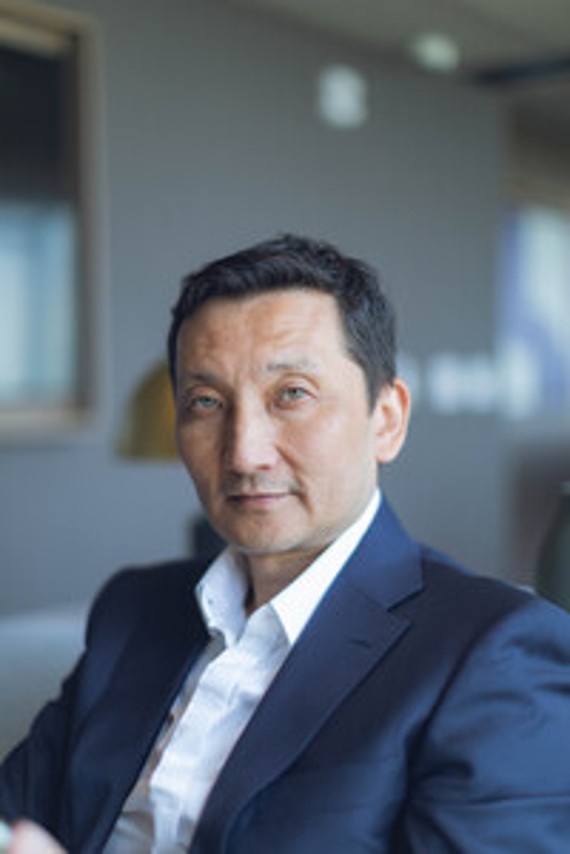
Kanat Sultanbekov: Converting Vision Into Infrastructure, Real Estate, and Thriving Businesses
Kanat Sultanbekov is a New York City-based entrepreneur, infrastructure executive, real estate investor, and business-growth strategist whose career spans nearly twenty years. He has worked at the intersection of government, construction, capital-project delivery, urban planning, industrial development, real estate, technology, hospitality, and consumer business. While these fields appear unrelated on the surface, Kanat Sultanbekov has found that they share a single underlying challenge: converting an idea into something real, workable, and built to last. Meeting that challenge has shaped nearly every chapter of his professional life.
Over the course of his career, Kanat Sultanbekov has directed citywide infrastructure initiatives, controlled sizable capital budgets, coordinated industrial-scale construction, evaluated real estate deals, and guided a premium New York brand from a first concept into a multi-location operation. Across each of these roles, he has built a track record for spotting opportunity, aligning stakeholders with competing interests, untangling complex problems, and turning plans into forward motion.
What distinguishes his approach is the balance between big-picture strategy and hands-on execution. Kanat Sultanbekov can assess a venture through the lens of long-term positioning, capital efficiency, and risk, then just as readily step into the granular work of permitting, staffing, contractor oversight, and day-to-day operations. That dual capacity — thinking at the strategic level while staying close to execution — runs through his entire career. He has long understood that bold plans fail without disciplined follow-through, dependable systems, strong leadership, and a willingness to confront problems head-on rather than around them.
Where It Started: Civil Engineering and Construction
Kanat Sultanbekov’s professional foundation was built in civil engineering. His Bachelor of Science in Civil Engineering gave him a technical grounding in how buildings, roads, utilities, and other physical systems come together — the fundamentals he would carry into every subsequent role.
He deepened that foundation with a Master of Science in Construction Management from Stevens Institute of Technology, which sharpened his ability to manage the organizational mechanics of construction: budgeting, scheduling, procurement, contract negotiation, quality control, and risk across large project teams.
He later added a Master of Arts in Financial Economics from Fairleigh Dickinson University, giving him a sharper command of capital markets, valuation, and investment risk. Rounding out this academic path, Kanat Sultanbekov completed the Launching New Ventures program at Harvard Business School, which reinforced his entrepreneurial instincts and his ability to judge whether a new idea could grow into a durable business.
Taken together, this education reflects how Kanat Sultanbekov approaches his work: as an integrated discipline rather than a set of separate skills. Engineering gives him command of the physical side of a project; construction management gives him command of delivery; financial economics informs his capital decisions; entrepreneurial training sharpens his read on market demand and differentiation. Rather than compartmentalizing these disciplines, he applies them simultaneously — weighing technical, financial, operational, and strategic considerations together rather than one at a time.
Directing Large-Scale Urban Development
Kanat Sultanbekov built deep experience in public-sector infrastructure through senior leadership roles in Astana and Almaty, Kazakhstan’s two largest cities. Serving as an owner’s representative and senior government executive, he directed or supervised more than 1,000 projects with a combined value exceeding $1 billion, while overseeing annual capital budgets of roughly $150 million to $200 million.
That scope gave him an unusually close view of the systems that let cities expand and function: roads, bridges, underpasses, transit infrastructure, utilities, housing, schools, hospitals, cultural facilities, public spaces, and master-planning efforts. His work contributed to approximately 100 million square feet of residential development and nearly 700 miles of roads and utility networks — infrastructure that underpins housing, mobility, commerce, education, health care, and civic life for growing populations.
Leading urban-development work of this scale required Kanat Sultanbekov to operate across a wide web of institutions and interests. Agencies, developers, investors, engineers, contractors, utility providers, community members, and residents all brought different priorities to the table. He learned to bring these groups into alignment while keeping a steady eye on cost, schedule, quality, compliance, and long-term public value. The experience gave him a granular understanding of how public policy, infrastructure investment, and private development interact — and reinforced a broader lesson about leadership in complex systems: when many organizations share a single outcome, progress depends on clarity of priorities, consistent communication, well-defined accountability, and the discipline to make decisions on time.
Rebuilding Transportation and Preparing Cities to Grow
Transportation projects made up a substantial share of Kanat Sultanbekov’s public-sector work. Among his notable achievements, he helped bring 12 bridges and underpasses to completion without delay — a meaningful feat given how exposed large transportation programs are to procurement snags, permitting holdups, utility conflicts, underperforming contractors, budget strain, and unexpected site conditions. Staying on schedule under those pressures demanded rigorous upfront planning paired with constant coordination throughout construction.
His leadership kept stakeholders pointed in the same direction, which allowed problems to be caught and resolved before they could derail the larger program — an experience that cemented his conviction that successful delivery is decided long before the first shovel hits the ground. Early choices about design, financing, scheduling, and risk allocation shape every phase that follows.
Kanat Sultanbekov also contributed to the rollout of an Intelligent Transportation System designed to smooth traffic flow, an initiative that illustrated how cities can pair physical infrastructure with technology to make transit networks more adaptive. He additionally worked to cut the share of unpaved roads across the city — an improvement that, while modest next to a major bridge or a smart-traffic system, has an outsized effect on everyday life by improving access, connecting neighborhoods, and supporting local commerce.
Separately, Kanat Sultanbekov played a role in revising Almaty’s master plan to account for rapid population growth, weighing how housing, transit, public services, utilities, and economic activity would all need to evolve together as the city expanded. That master-planning work gave him a long horizon on urban growth: a city that adds housing without matching investment in transit, utilities, schools, and public space places unsustainable strain on itself. It taught him to treat individual projects as pieces of a larger system — a bridge is never just a structure, and a housing development is never just a cluster of buildings; each one shapes how people move, where capital flows, and how a city ultimately performs.
Industrial Construction and Government Contracting
After his public-sector infrastructure tenure, Kanat Sultanbekov took on senior engineering leadership at Kazakhstan Engineering, where his portfolio covered industrial construction, government contracting, procurement, vendor oversight, and cost control. He managed more than 90 contracts worth a combined $200 million and identified roughly $20 million in cost savings — a result that required more than trimming budgets line by line. It meant tracing exactly how resources were deployed, assessing vendor performance, and finding structural efficiencies within a large and complex contract portfolio.
His work included oversight of an Airbus C-295 manufacturing facility and a heavy-vehicle assembly plant — industrial projects with demanding requirements around specialized equipment, technical systems, construction sequencing, safety protocols, and operational readiness. Delivering them meant coordinating government bodies, contractors, suppliers, engineers, and future operators, with Kanat Sultanbekov keeping every party focused on shared delivery goals while resolving the contractual and technical issues that inevitably arose.
His broader project background also extends into oil and gas, airport expansion, residential and commercial construction, and hospitality, including work in New York involving Equinox fitness clubs. That range has given Kanat Sultanbekov a wide-angle view of how the fundamentals of project delivery — planning, accountability, communication, and responsive leadership — hold true across industries, even as the specific technical demands shift from one sector to the next.
From Infrastructure to Entrepreneurship
For Kanat Sultanbekov, the move into entrepreneurship and business growth was less a career change than a natural continuation. Whether the end product is a public road, a residential tower, an industrial plant, or a consumer business, every one of them begins as an idea that needs people, capital, systems, and disciplined execution to become real.
In the United States, Kanat Sultanbekov has applied that same lens to evaluating market opportunities and building businesses designed to stand out in crowded fields, with particular interest in unmet customer needs and the factors that tip a customer’s loyalty toward one brand over another. In his view, a strong product or service is necessary but not sufficient — a business also needs a clear market position and a customer experience built to deliver on its promise, which means location, design, service, staffing, pricing, and brand messaging all have to work in concert.
This outlook draws directly on his dual background in construction and operations. He understands how physical space shapes customer perception and employee performance, but he’s equally clear-eyed that an appealing space can’t paper over weak operations or a muddled value proposition. As a result, Kanat Sultanbekov evaluates businesses holistically, examining how market opportunity, brand, real estate, capital structure, buildout, team, and operating model all reinforce — or undermine — one another.
Building Gilded Ritual Into a Multi-Location New York Brand
One of the clearest illustrations of Kanat Sultanbekov’s entrepreneurial method is his work with Gilded Ritual, where he played a central role in taking the company from an early-stage concept to a premium, multi-location luxury-services brand in New York approaching $5 million in annualized volume. His involvement has spanned concept development, customer positioning, competitive differentiation, market research, site selection, lease negotiation, construction, financial planning, fundraising, staffing strategy, operating systems, investor relations, and multi-location expansion.
At the concept stage, Kanat Sultanbekov helped shape the kind of experience the brand should deliver and how it could carve out a distinct position in a crowded market, work that drew on an understanding of customer expectations, competitor offerings, pricing dynamics, brand identity, and neighborhood characteristics.
Site selection and lease negotiation introduced further complexity: a location has to serve customers and reinforce the brand while also panning out financially and operationally. Lease terms, buildout costs, neighborhood demographics, foot traffic, and long-term market potential all factor into whether a site will succeed. His construction background let him weigh the physical and financial trade-offs of each space, evaluating buildout scope, flagging risk early, coordinating with contractors, and anticipating how design choices would shape both the customer experience and daily operations.
As Gilded Ritual scaled, Kanat Sultanbekov turned his attention to the systems needed to support growth, because multi-location expansion only works if the brand experience stays consistent while adapting to each site’s conditions. That requires documented processes, dependable staffing models, financial discipline, and clear performance standards. His work on the brand shows how he pairs creative insight with structured execution: recognizing a promising concept, defining what makes it distinct, and then organizing the capital, real estate, people, and operating systems that concept needs to grow.
A Hands-On Approach to Solving Problems
Kanat Sultanbekov leads by staying close to problems rather than managing them from a distance. He regularly speaks directly with the people nearest to an issue- project managers, contractors, engineers, officials, vendors, investors, or employees, depending on the situation- because understanding why something went wrong matters as much as knowing what happened.
Across his career, he has navigated construction delays, cost overruns, procurement disputes, contractor conflicts, regulatory hurdles, operational breakdowns, and shifting project conditions; circumstances where composure matters because other parties are often working with incomplete information or competing agendas.
Kanat Sultanbekov brings structure to these moments: isolating the core issue, separating what’s urgent from what can wait, mapping the realistic options, and weighing the practical trade-offs of each before committing to a plan. His process blends analytical rigor with creative flexibility — he relies on data and financial judgment to size up risk, but he’s equally willing to consider paths that aren’t the obvious first choice, which has repeatedly let him find openings in situations that initially looked closed off. He sees this kind of adaptive leadership as most essential precisely when reality departs from the plan, since even the most carefully built strategy will eventually collide with the unpredictability of execution.
A Real Estate Investor’s Perspective
Real estate is another core pillar of Kanat Sultanbekov’s work, with experience spanning acquisitions, underwriting, due diligence, valuation, financing, syndication, capital formation, investor presentations, and sponsor-level decisions within fund and special-purpose-vehicle structures. When he evaluates a deal, he looks well past a single financial metric, weighing the asset’s condition, operating performance, financing needs, market position, regulatory context, development upside, and surrounding infrastructure.
His background in urban development gives him a clear view of how public investment and neighborhood shifts can reshape real estate value — transit access, road improvements, utility upgrades, population growth, and city planning can all move the needle on a property’s future. His entrepreneurial experience adds another layer: for an operating business, real estate isn’t just a line item; it’s part of the brand and the environment where employees and customers interact. Together, these perspectives let Kanat Sultanbekov assess both a property’s current value and its upside through better management, redevelopment, repositioning, or shifts in the surrounding market.
A Global, Multilingual Vantage Point
Kanat Sultanbekov’s career has unfolded across multiple countries, giving him a genuinely international frame of reference. He speaks English, Russian, and Kazakh, with working knowledge of Turkish — language skills that support his ability to work effectively with partners, investors, vendors, and technical experts from different backgrounds, which matters enormously in infrastructure, real estate, and investment work that regularly crosses borders.
Having worked in both Kazakhstan and the United States, Kanat Sultanbekov has seen firsthand how government, business, urban planning, and consumer behavior differ from one market to the next. Rather than assuming a playbook from one city will translate directly to another, he pays close attention to local conditions and adjusts strategy accordingly — an instinct that now sits at the core of his investment and entrepreneurial thinking. A concept that thrives in one neighborhood can require real rethinking in another, and understanding local demand, regulation, and culture is essential to getting that right.
A Student of New York
New York City is central to both Kanat Sultanbekov’s professional and personal life, not just as a place to do business but as a city he studies closely. He follows how neighborhoods, developments, and businesses evolve, paying attention to how infrastructure, zoning, transit, and shifting consumer tastes shape which properties and concepts succeed. He also has a genuine interest in New York’s dining scene, from under-the-radar spots to the city’s fine-dining establishments, a pursuit rooted in his broader curiosity about hospitality and customer experience, including how top restaurants use atmosphere, design, service, and brand identity to create something memorable.
Restaurants, in his view, are entrepreneurship on full display: they need a sharp concept, cost discipline, consistent execution, a strong team, and customer loyalty, all within one of the most competitive markets anywhere. New York’s constant churn makes it the ideal backdrop for someone with Kanat Sultanbekov’s interests, bringing together real estate, infrastructure, hospitality, and business innovation at a density few other cities can match.
Discipline Outside of Work
Outside the office, Kanat Sultanbekov keeps an active routine, running roughly twice a week and recently adding boxing to his training. Running builds endurance and consistency; boxing demands focus, coordination, and the ability to adapt quickly, qualities that mirror what he values professionally: preparation, discipline, and steady improvement. He’s also a soccer and hockey fan, drawn to the teamwork, strategy, and split-second decision-making both sports demand, and he enjoys hiking and time outdoors as a change of pace from the city’s intensity.
Travel rounds out his interests, particularly destinations centered on nature, where he can explore new landscapes, take part in outdoor activities, and observe how local communities relate to their environment. Wherever he goes, that same curiosity follows him, toward the built environment, local food, hospitality, and the small details that make a place distinct; observations that frequently feed back into his professional thinking about cities, development, and what makes a business memorable.
Builder, Operator, Investor
No single title fully captures Kanat Sultanbekov’s career. He combines the perspectives of a civil engineer, infrastructure executive, public-sector leader, urban-development strategist, entrepreneur, operator, and real estate investor, a range that lets him see how the pieces of a project or business fit together, from technical requirements and construction risk to capital structure, regulatory process, market demand, and customer experience.
What ties it all together is a consistent interest in how value gets created, sometimes through essential infrastructure that prepares a city for growth, other times through repositioning a property, spotting a market gap, or scaling a differentiated brand. In every case, Kanat Sultanbekov focuses on turning ideas into concrete plans and measurable results, asking what need isn’t being met, what’s standing in the way, and how people, capital, and resources can be organized more effectively to get there.
Today, Kanat Sultanbekov continues to pursue opportunities where infrastructure, real estate, entrepreneurship, and business growth intersect. His blend of technical depth, financial fluency, operational experience, and entrepreneurial instinct equips him to take on complicated challenges with both imagination and discipline, whether he’s sizing up an investment, opening a new location, managing a crisis, or studying how a city is changing, always with an eye on what it takes to build something durable and position it for lasting success.